Sofia Schmitt · 6 November 2026
Investigating Amphibian Crossing Behaviors Along Creek Trail Networks During Seasonal Migrations
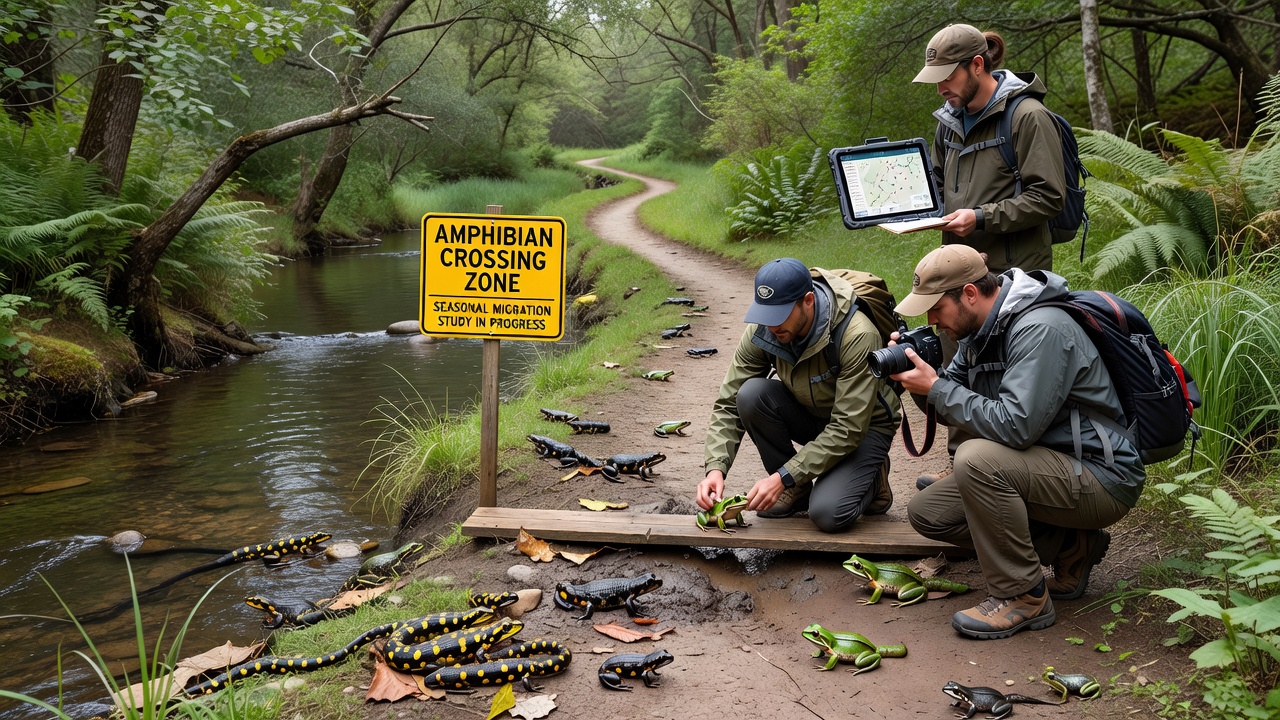
Amphibians including frogs, toads, and salamanders move across creek trail networks each year as part of their breeding cycles, and field teams have tracked these patterns through repeated surveys that combine direct observation with sensor data. These crossings occur mainly during spring and fall when moisture levels rise and temperatures stabilize, prompting animals to travel from upland habitats to breeding ponds and back again. Researchers place motion-activated cameras and pitfall traps at key points along established trail segments, then log the timing, direction, and species of each individual that passes.
Seasonal Timing and Environmental Triggers
Data gathered since 2023 shows peak movement periods align with rainfall events that saturate soils and reduce desiccation risk, while November 2026 records indicate continued activity into late fall because unseasonably warm conditions extended the window for late breeders. Teams correlate these observations with stream gauge readings and soil moisture probes installed at regular intervals, revealing that crossings cluster within 48 hours of precipitation totals exceeding 15 millimeters. Temperature thresholds also matter, as most species avoid movement when nighttime lows drop below 5 degrees Celsius.
Research Methods Deployed on Trail Networks
Investigators use a combination of mark-recapture techniques and radio telemetry tags on larger salamanders to map individual routes across the trail grid. Volunteers walk fixed transects at dawn and dusk, recording GPS coordinates for each sighting, while automated acoustic recorders capture calling activity that signals the start of breeding migrations. These methods produce layered datasets that researchers cross-reference with satellite imagery to identify vegetation corridors that channel animals toward creek crossings.
Observed Patterns and Species Differences
Spotted salamanders tend to follow the same narrow paths year after year, whereas wood frogs spread more widely across open trail sections. Counts from multiple creek networks indicate that 60 to 70 percent of crossings happen within two meters of existing water flow channels, and individuals often pause at trail edges before committing to the open surface. According to U.S. Geological Survey monitoring summaries, such route fidelity helps explain why certain trail segments experience repeated high volumes during migration windows.
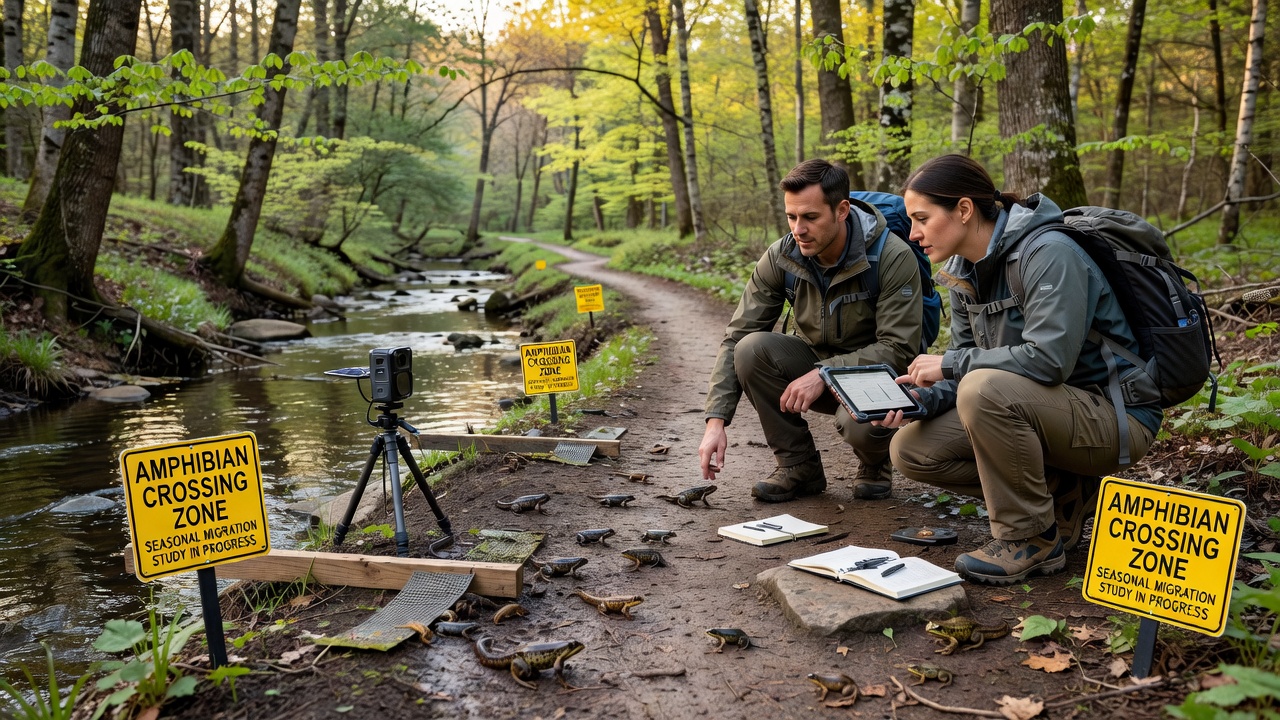
Comparisons between networks reveal that trails with denser leaf litter on either side support higher crossing success rates, because animals spend less time exposed on the path itself. In contrast, compacted or gravel-covered segments show lower passage numbers and higher rates of reversal, where animals turn back before completing the crossing.
Interactions with Trail Infrastructure
Boardwalks and culverts installed along some creek trails alter movement by creating shaded, moist microhabitats that amphibians exploit. Telemetry data demonstrate that tagged individuals detour toward these structures when available, reducing the distance traveled on exposed surfaces. Maintenance crews have adjusted mowing schedules in response, leaving vegetated buffers intact during known migration months to maintain connectivity between habitat patches.
Conclusion
Continued monitoring through November 2026 and beyond supplies the baseline needed to evaluate how changing precipitation patterns affect future crossing success. The datasets generated by these investigations feed directly into trail management plans that aim to preserve functional movement corridors without restricting public access. Researchers continue to refine sensor placement and expand volunteer networks so that coverage across additional creek systems remains consistent year to year.